- Mar 10
Teaching Responsiveness to the Outside Rein
- Felicitas von Neumann-Cosel
- 0 comments
A common misunderstanding in riding is the phrase “riding the horse into the outside rein.” If not done correctly, this can lead to a rider with too much weight in their outside hand and a horse that isn't very responsive. The goal is for your horse to be equally soft and responsive on both sides, allowing you to use both the inside and outside reins effectively.
The inside rein is responsible for lateral flexion at the poll, while the outside rein is a powerhouse for transitions, lateral and longitudinal balance, and maintaining an even gait. But none of this is possible if your horse is heavy in the hand. To encourage your horse to lighten the contact, you need to challenge its whole body to learn how to carry itself.
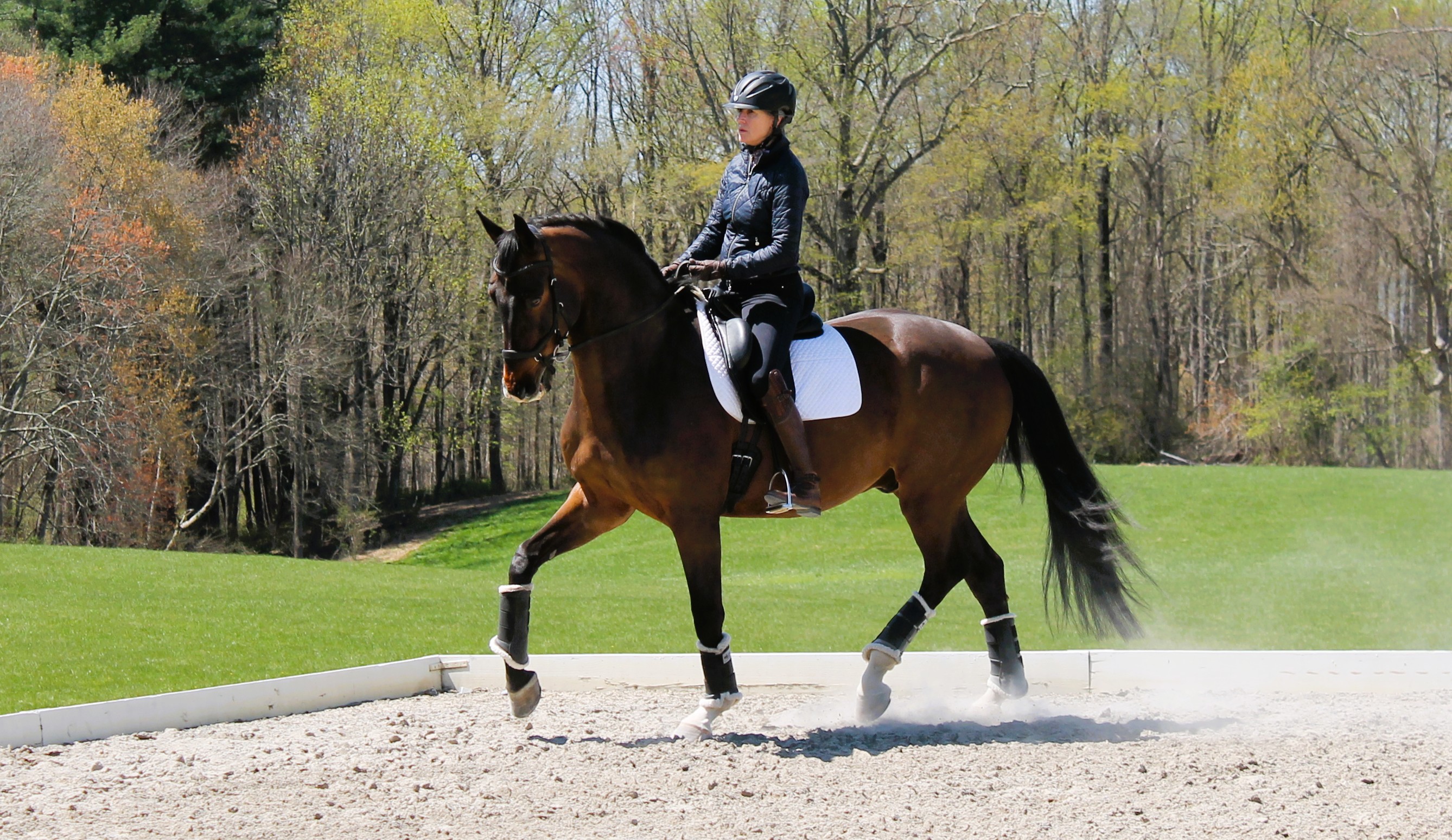
The Exercise: Turn on the Forehand
Here is a great exercise to help your horse better understand and respond to the outside rein, while lightening the contact.
Start by trotting a 20-meter circle to the left.
When you reach the long side of the arena, halt.
Flex your horse to the outside and perform a turn on the forehand, moving your horse away from your right leg. This helps to bend the body and achieve a softer right (outside) rein.
Immediately trot off, maintaining the lightest possible contact.
After a half circle, as you reach the rail again, repeat the halt and turn on the forehand. Once again, move away from your outside leg with an immediate upward transition.
Throughout the next repetition, use small aids on the outside rein to check if your horse is becoming more responsive.
After several repetitions, you should feel your horse start to anticipate the downward transition and turn, balancing back and lightening on the outside rein. At this point, you can occasionally check in—if your horse feels light and responsive on the outside rein, keep trotting without the turn. This will give you that "half-halt" feeling you're looking for.
Once your horse is familiar with the exercise, you can use the turn on the forehand anywhere you need it, and even transition out of a canter.
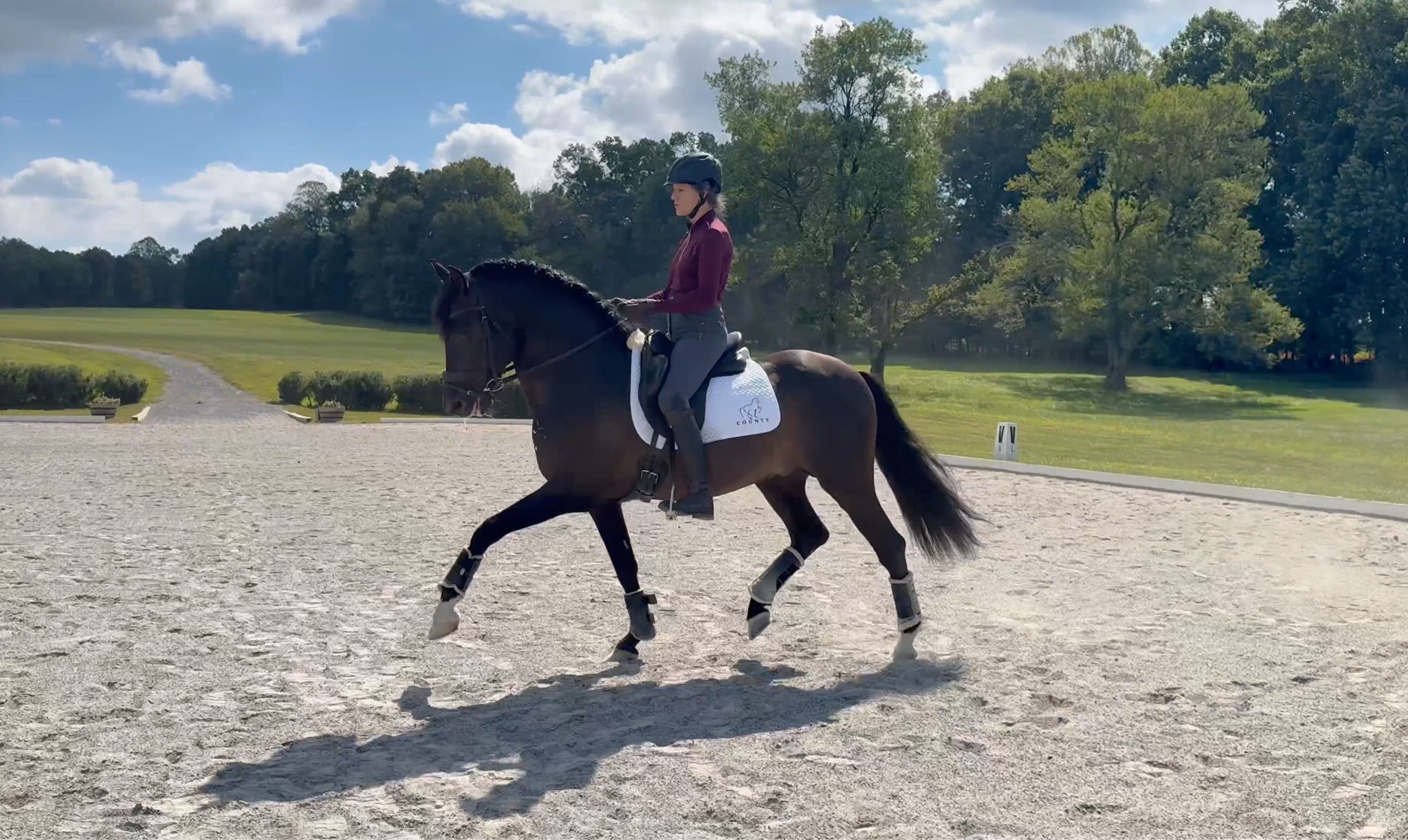
Refining Your Transitions
As you work on this exercise, remember that your transitions shouldn't come solely from your hands. It's easy to overuse the reins when preparing for the downward transition into the turn on the forehand, and many riders get confused about which rein to use when.
Let’s clarify: The inside rein asks for flexion. So, when you're preparing for a turn on the forehand at M while tracking left, you'll need to plan your transition well in advance. Start by using your outside (right) rein for a half-halt to prepare your horse for a new request. Use your core, along with a little outside leg and the inside rein maintaining flexion. You should feel the horse stepping forward into the downward transition to avoid more tension in the rein.
As you approach M, you’ll change the flexion by opening your outside rein. Use your new outside leg to encourage your horse to bend around that new flexion, guiding them into the turn.
Is your body too stiff to move with your horse during the trot transition?
If you're struggling to soften your body and allow these movements to happen naturally, you may need to incorporate other exercises. Improving your body's biomechanics can be a frustrating challenge, but it's essential for better creating better fluidity and harmony with your horse.For effective exercises to help with tension, check out our course on "Tools for Horse and Rider"