- Jun 30
Mastering the First Level Counter Canter Loop
- Felicitas von Neumann-Cosel
- 0 comments
For many riders, April marks the transition into more demanding work as we move from Training Level toward the nuances of First Level. One of the most common hurdles in the USDF First Level tests is the shallow counter canter loop. It’s a movement that quickly reveals a loss of balance or engagement, often resulting in a horse breaking to the trot or unintentionally switching leads. To conquer this movement, we have to look at the clarity of our aids and how our own bodies might be hindering the horse’s rhythm.
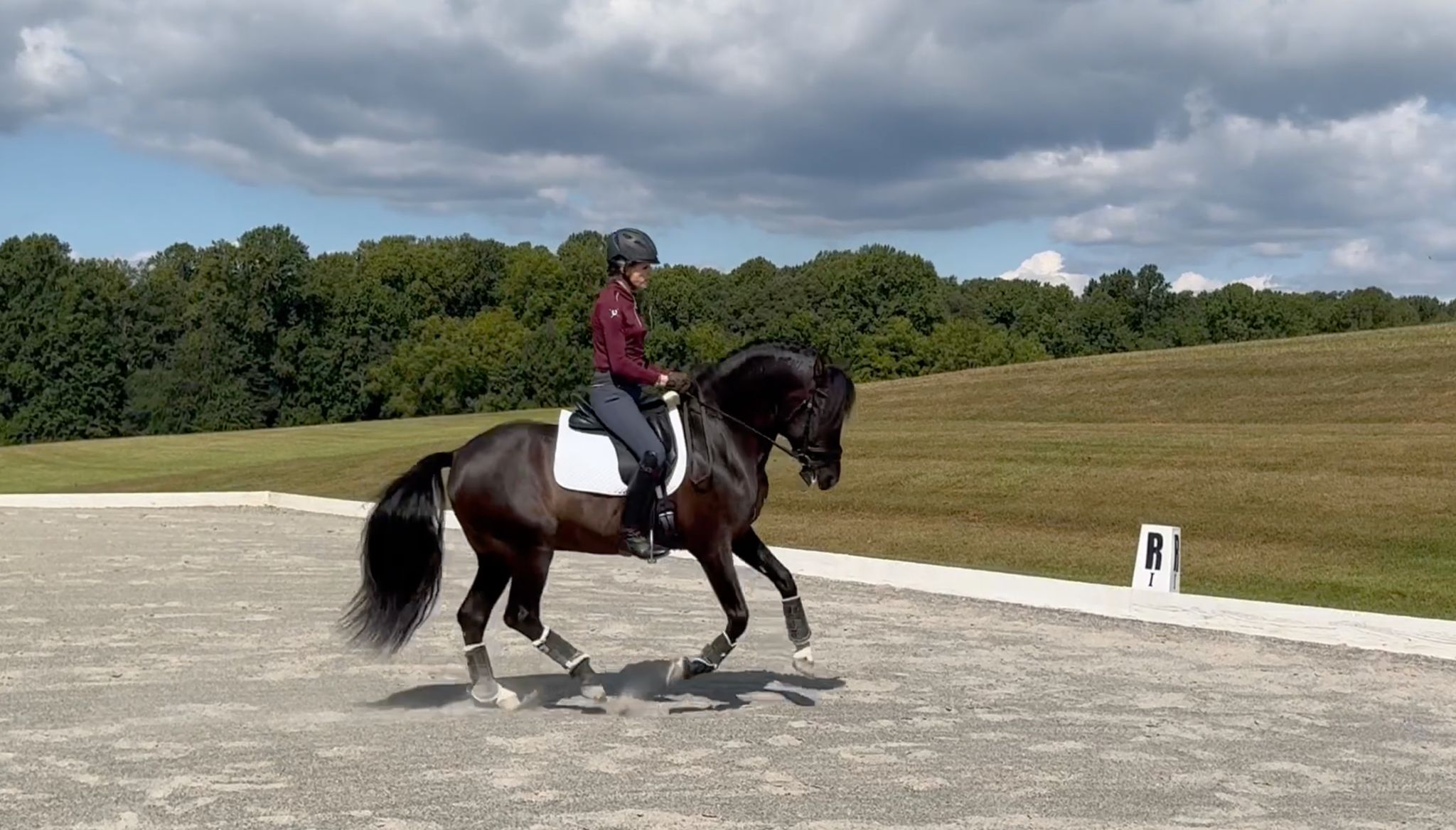
The Visualization: Guiding the River
When we feel a horse lose balance, our natural instinct is often to "hold" them together by gripping. However, tension is the enemy of the canter.
Imagine that your legs are gently guiding a river flowing between them. Your goal is to shape the banks of that river without obstructing the water. If you squeeze with your thighs or knees, you effectively "close the gates," stopping the flow of energy and stalling the movement. Instead, think of your legs as soft guides that allow the energy to move forward while maintaining the desired curve.
The Biomechanics of the Lead
To keep that "river" flowing on the correct lead, the clarity of your aids is paramount:
The Seat: Your inside seat bone must stay forward, moving independently from the outside.
The Leg: Your outside leg stays back from the hip, positioned just behind the girth.
The Connection: Your legs should "breathe" against the horse’s sides. Any strong gripping will lock your pelvis, making it impossible for your seat bones to follow the horse’s rhythm.
The "Circle-Loop-Circle"
To help manage a horse’s anticipation and maintain balance, try breaking the serpentine loop down into manageable segments.
The Prep: Ride a 10-meter circle in the corner before starting the serpentine. This establishes the necessary engagement and balance.
The Approach to X: Think of the loop as two half-diagonals. As you head toward X, maintain the same quality you had in the small circle.
The Mental Reset: As you reach the centerline, ride with the intention of performing another 10-meter circle at X. You don't always have to actually ride the circle; the mere intention helps you re-align your aids and prevents you from leaning or rushing the turn.
The Return: Finish the loop as a diagonal back to the track. If the canter quality starts to fade, add another 10-meter circle at the end to regroup.
As the horse remains more balanced and "between your aids," you can phase out the physical circles and rely on the visualization of the river to keep the movement fluid.